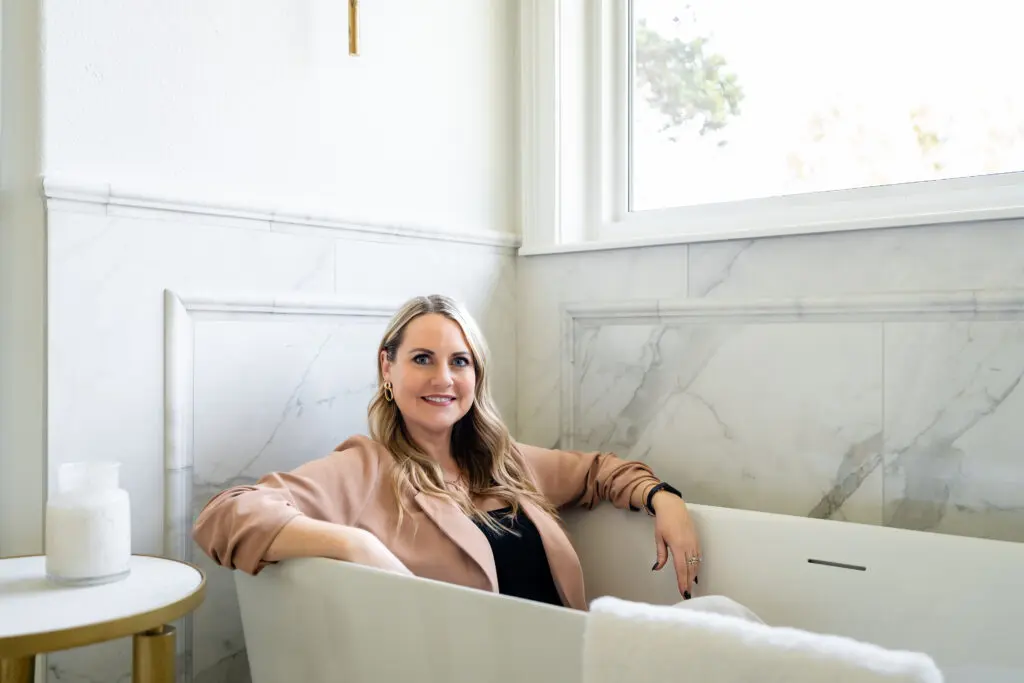
The Beauty of Marble Without the Price Tag or Upkeep
Marble creates that classic spa-like bathroom look: luxurious, timeless, and refined. But as beautiful as marble is, it also comes with a higher price tag and more maintenance than many homeowners expect.
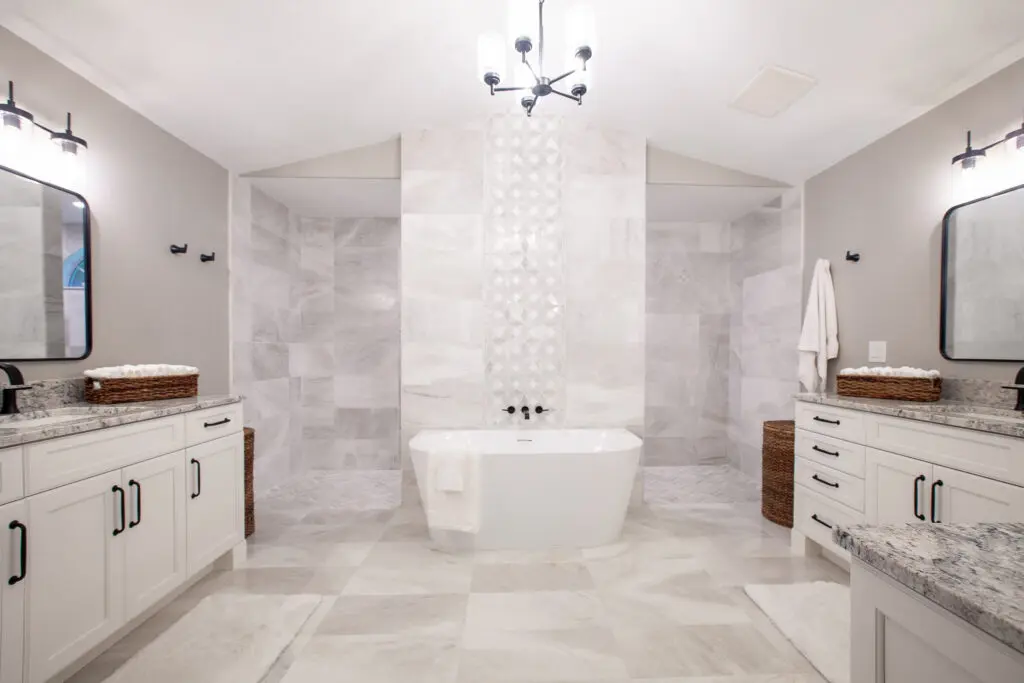
The material itself is more expensive than porcelain, and the labor is typically higher as well. Marble requires careful cutting to avoid chipped edges, additional time for finishing details, and often more intricate layouts such as herringbone, subway patterns, or custom borders. Even rounding the edges can add to the cost.
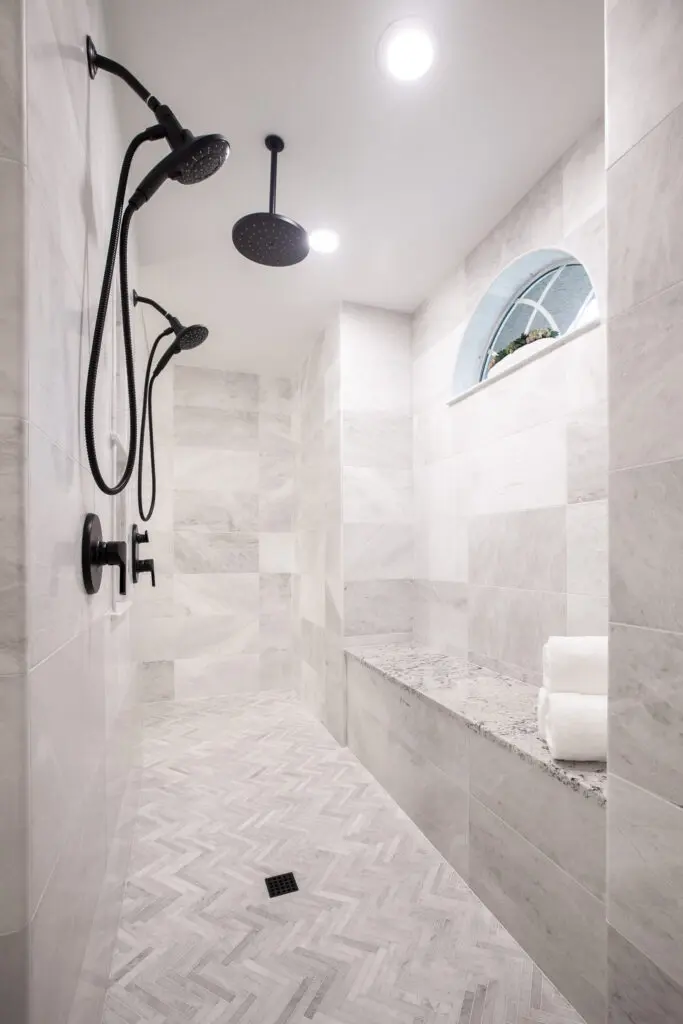
Another important factor is sealing. After marble is installed, it needs time to set before grout can be added. Once the grout cures, the marble must be sealed, and the sealer also needs time to dry before the surface can be walked on or used. This can add extra days to the installation schedule.
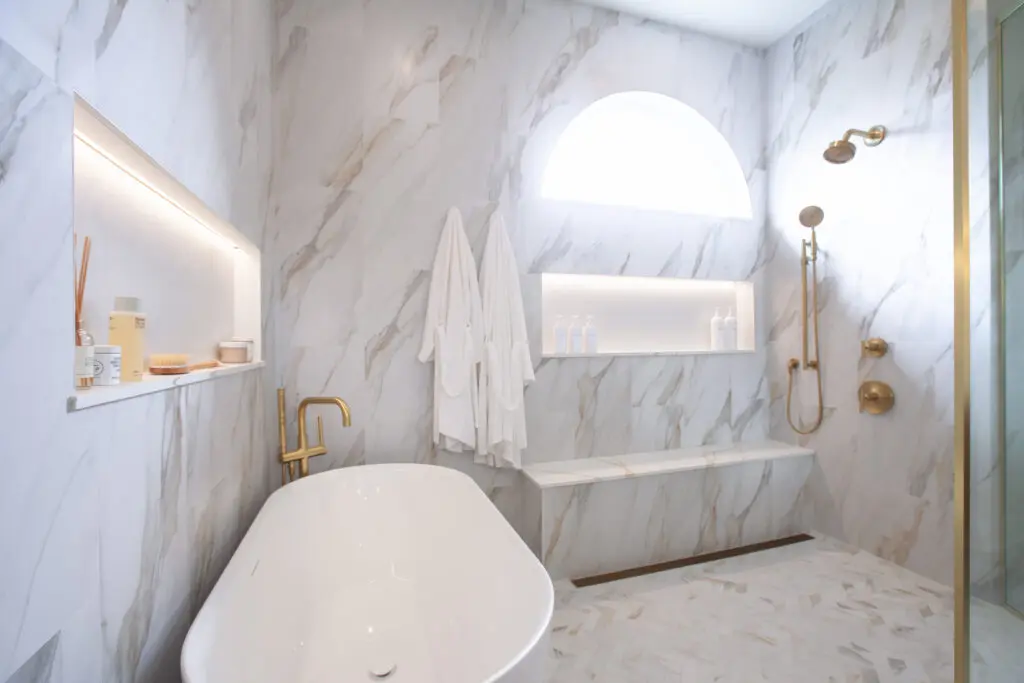
Porcelain tile is a great alternative because it now comes in a wide range of shapes, sizes, and veining patterns that closely resemble natural marble. In many cases, porcelain can achieve a similar look for half the price — sometimes even a quarter of the price.
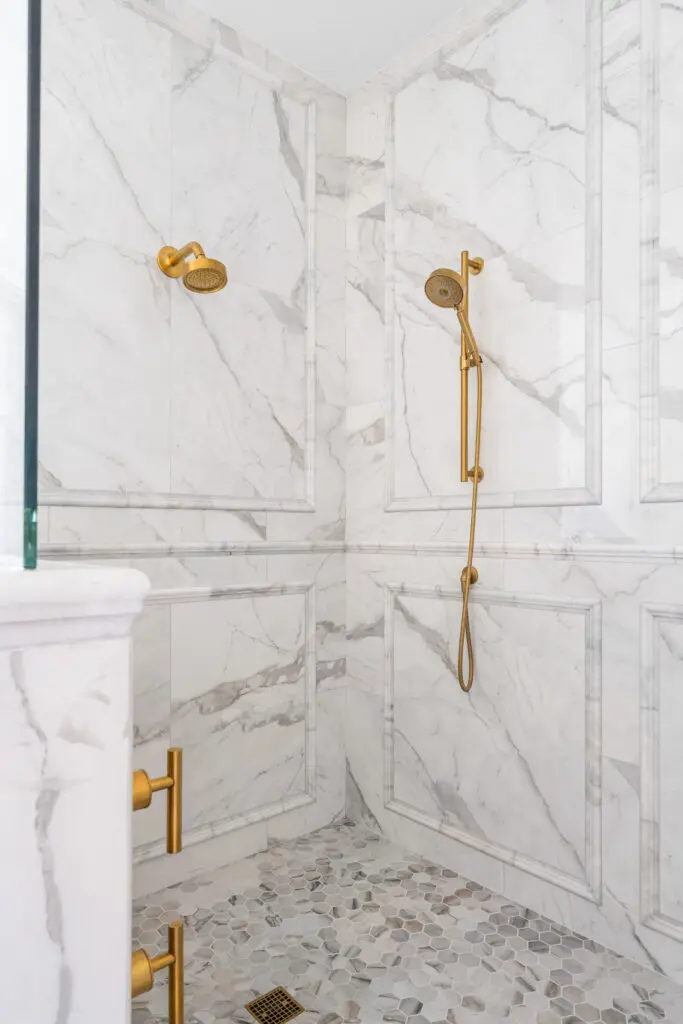
One of my favorite design approaches is mixing porcelain and marble together. For example, porcelain can be used on the shower walls while marble is used on the floor. Another option is adding a marble chair rail, border, or accent detail to give the impression of a fully marble space. This creates a classic, luxurious look while keeping the project more practical and budget-friendly.
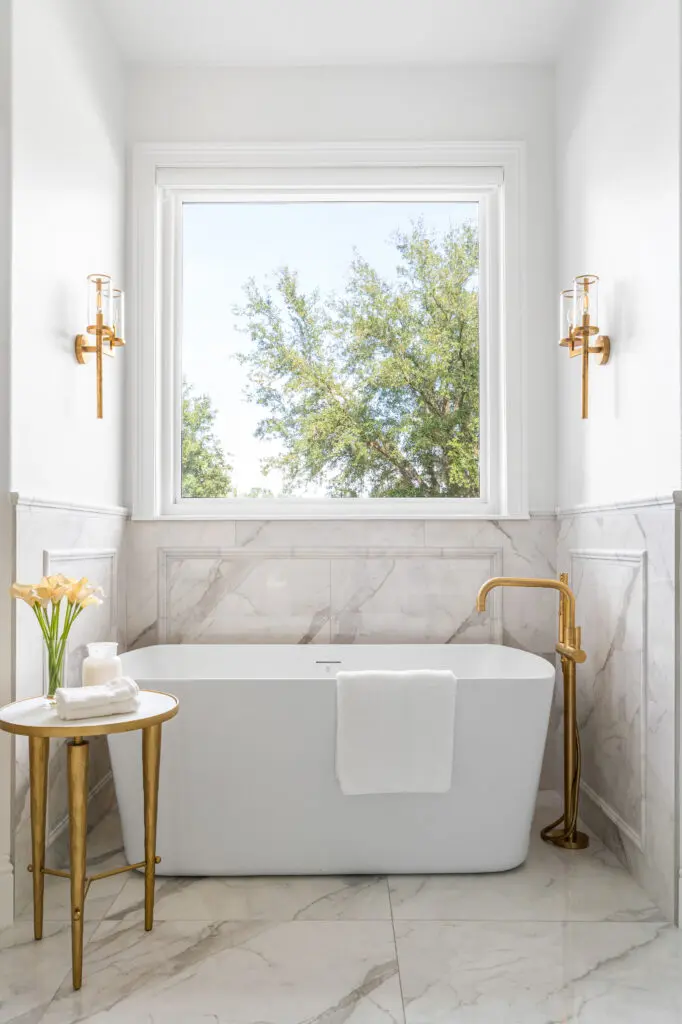
Why Sealer Is Important
Marble is naturally porous, which means it can absorb water if it is not properly sealed. Sealer helps protect the stone by bonding the pores so moisture cannot easily penetrate the surface.
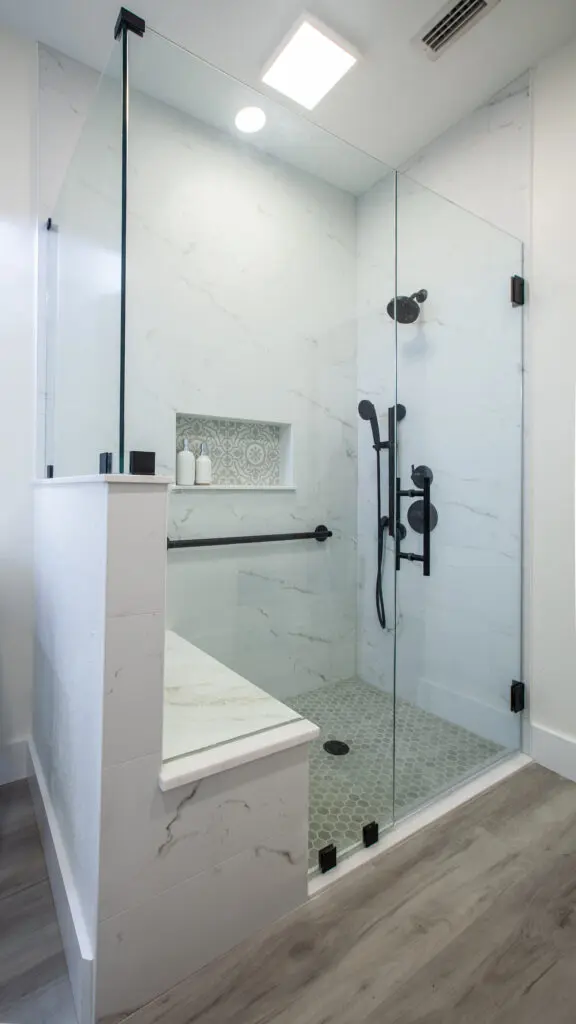
Over time, however, sealer wears down—especially in areas with more wear and tear, such as shower floors. To maintain protection, marble should typically be resealed every four to five years, though high-use areas may require more frequent maintenance.
If water penetrates the marble, it can make the tile more brittle and more prone to cracks or chips. On lighter marble, moisture can also alter the color of the stone, sometimes giving it a yellow hue. Regular resealing helps preserve both the appearance and longevity of the marble, keeping it looking beautiful for years to come.
Final Thoughts
Marble is undeniably beautiful, but it is not always the most practical option for every bathroom. Porcelain offers a smart alternative for clients who want the elegance of marble without the higher cost, longer installation timeline, and ongoing maintenance. By thoughtfully mixing porcelain with real marble details, you can create a bathroom that feels classic, elevated, and luxurious — while still being durable, functional, and budget-conscious.